- Email Mastery
- Posts
- Edition #32: The signup source nobody tracks
Edition #32: The signup source nobody tracks
Where they came from matters more than how many you got.

Alec Beglarian
April 14, 2026
Hello email aficionados,
As usual, we're sharing the most valuable reads to make email marketing successful:
Why some signups hurt your list more than they help
How to turn transactional emails into marketing wins
What Otter's welcome email gets right
📧 Not all signups are equal
Email marketers often measure list building by one number: how many new subscribers this month.
That number shows you're doing something to get subscribers, but it's not the full picture.
What matters is where those subscribers came from and what they expected when they signed up.
A popup that says "Get 10% off" attracts coupon hunters. They'll grab the discount, maybe open one email, then go silent. You just added dead weight to your list.
A co-registration partnership where people get auto-opted-in? Even worse. They never chose you. They'll ignore you from day one, and Gmail will notice.
The most valuable are the ones who subscribe because they read an article on your site, liked it, and wanted more.
The acquisition source shapes everything downstream:
Open rates. Click rates. Complaint rates. How long they stay engaged. Whether they ever buy again.
And most teams never connect those dots.
They don't track performance by signup source. They don't segment new subscribers by where they came from. They treat every address the same from the moment it hits the list.
Then three months later, engagement is sliding and nobody can explain why.
The fix isn't complicated.
Tag every subscriber with their acquisition source. Track engagement by source over 30, 60, 90 days. Find which sources bring people who actually stick around.
Then cut or fix the ones that don't.
Growing your list slower with better sources will always beat growing it faster with bad ones.
The list isn't the asset. The quality of attention on that list is.
📧 Transactional emails as a missed marketing opportunity
Your best-performing emails are the ones nobody on your marketing team wrote.
Order confirmations. Shipping notifications. Password resets. Account updates.
These get 2-4x the open rates of any campaign you'll ever send.
And most companies treat them like system logs.
Plain text. No brand voice. No thought put into them at all.
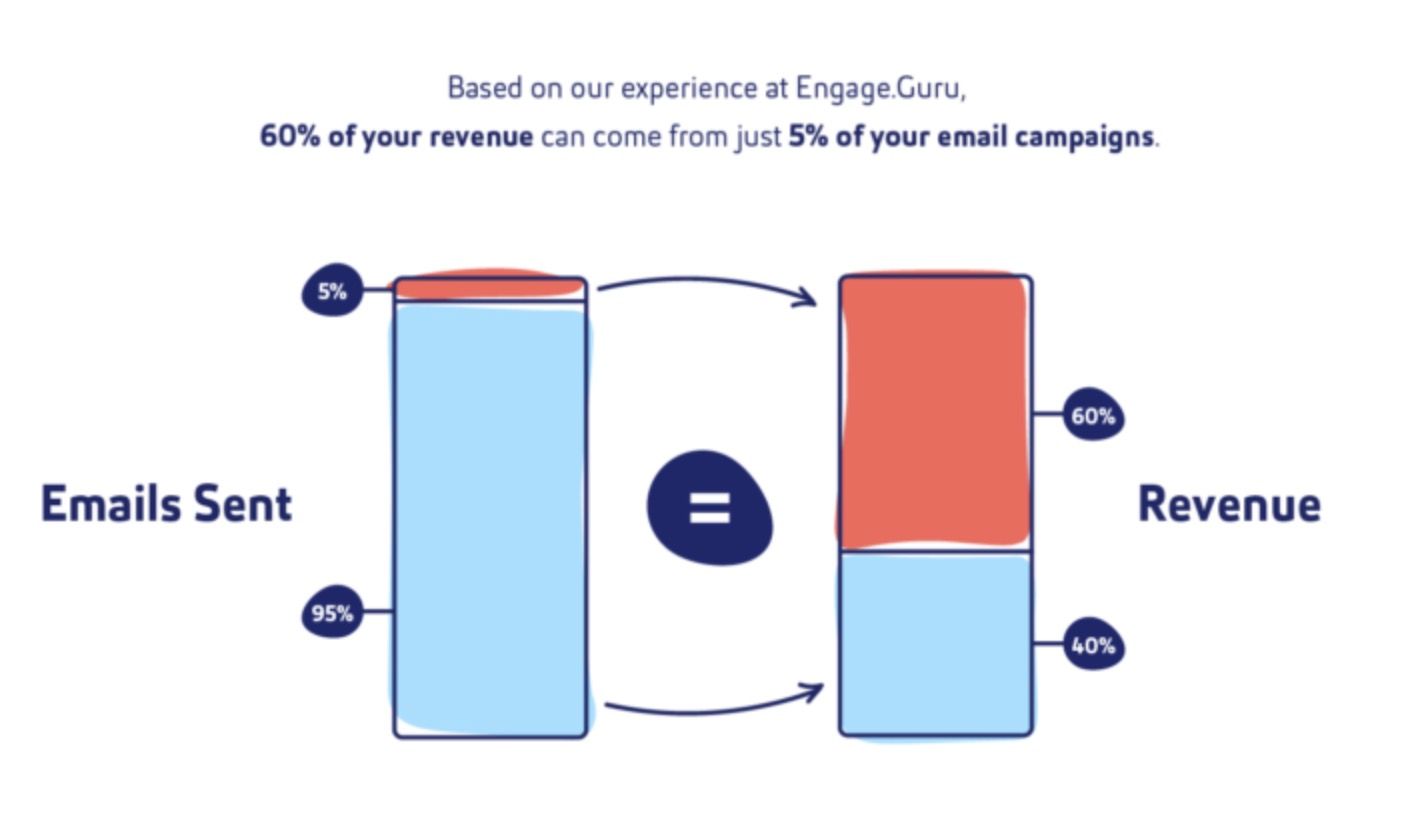
That's a massive missed opportunity.
Some examples of what good looks like:
👉️ Order confirmation. Most brands send a receipt and stop. Allbirds uses theirs to reinforce their sustainability message and recommend complementary products. Same email, but now it's doing two jobs.
👉️ Shipping notification. Your customer is already excited. They're tracking the package. Glossier turns this into a moment by making the copy feel like a friend texting you that your stuff is on its way. It builds brand affinity when attention is at its peak.
👉️ Password reset. The most ignored transactional email. Slack's is clean, fast, and still sounds like Slack. It's ten seconds of interaction, but it reinforces who they are.
👉️ Account creation. Notion's welcome email doesn't just confirm the signup. It gives you three clear starting points so you actually use the product. Onboarding starts in the inbox, not after the login.
Every transactional email is a moment where someone is already paying attention.
You don't need to earn the open. It's already happening.
The question is whether you're using that attention or wasting it.
📫️ From the inbox
This email is from Otter. It's a welcome email that activates new users by showing them three ways to start using the product.
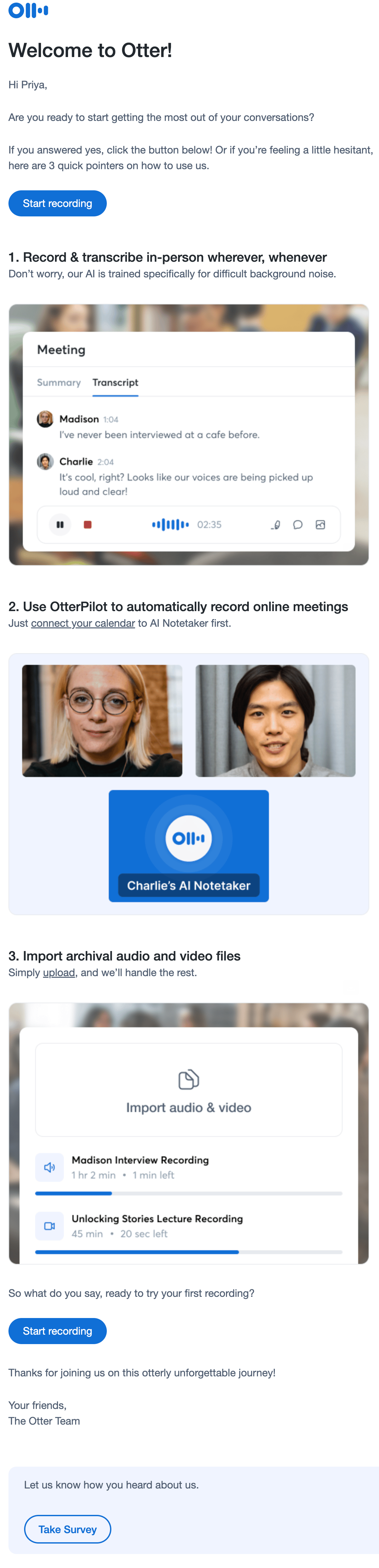
Here's what we liked in this email:
Organized around use cases, not features. "Record in person," "record online meetings," "import old files." Each one answers "when would I actually use this?" — exactly what a new user needs to figure out.
Product screenshots do the selling. The transcript screenshot shows two speakers, timestamps, and a waveform. That's demonstrating accuracy and multi-speaker support without saying any of it in copy.
Objection-handling baked into the copy. "Don't worry, our AI is trained specifically for difficult background noise." Addresses a real concern in one line, right where it matters.
Two CTAs, same label, different mindsets. "Start recording" at the top for eager users. Same button at the bottom for people who needed convincing first. Both covered.
The survey ask stays out of the way. It's in its own footer zone with a different background. Doesn't compete with the activation flow above it. Smart separation.
👀 Worth the read
Best,
Alec
P.S. Have a topic you’d like us to cover in the next edition? Reply to this email and let us know! We're always eager to address.